Planned industrial hub with labeled lots

How we work

A phase-by-phase roadmap showing our end-to-end methodology: we plan, legalize, structure and bring in the companies.

01

Market and social intelligence

Diagnosis and intelligence

A successful industrial hub starts with real data analysis and dialogue with the population.

Municipal diagnosis

The first step: a municipal survey on how the administration is rated, what residents need most, what they complain about most and what they want most. The results are presented to the municipality together with our solution.

Market studies and regional potential

In-depth technical analysis of the socioeconomic base, logistics corridors and available resources. We identify which sectors (logistics, manufacturing, agribusiness or energy) have the greatest synergy and chance of success in the region.

Public opinion and social impact research

Scientific sample surveys to understand public perception and job expectations and reduce resistance, ensuring peaceful and beneficial alignment between the project and society.

Data processing and analysis

The analyst's expertise ensures decisions are not based on misreadings and gives the municipality a deeper view of the information.

02

Territorial, legal and regulatory engineering

Land and feasibility

This phase validates and regularizes the potential of the assessed sites. We take on all the red tape and legal complexity to deliver 100% regularized land.

Technical team assessing a site for the industrial hub

Site prospecting and feasibility

Mapping strategic sites by assessing topography, access to highways and ports, high-voltage power grids and the water resources needed for factory operations.

Urban zoning

Checking whether the municipal Master Plan allows industrial activity in the area.

Environmental licensing

Obtaining the mandatory licenses (preliminary, installation and operating — LP, LI and LO) to start construction and operations.

Topography and geotechnics

Assessing soil and terrain to support construction and heavy machinery.

Land regularization

Legal structuring of land titles and subdivision of the industrial lots.

Specialized legalization and expropriation

Full management of expropriation processes for public purposes: from drafting the municipal or state decree and property appraisal reports to negotiation and fair compensation for owners.

Government filings and licensing

End-to-end processing of permits, zoning, environmental licenses and tax incentive applications with municipal, state and federal bodies, such as Sudene.

Legal shielding

Transparent processes that protect the project against future legal disputes.

03

Infrastructure, financing and legislation

Infrastructure and business model

Industries look for sites ready to operate with no production bottlenecks. In this phase we also define the financial and legal rules of the development.

Basic infrastructure and connectivity

Power supply

Installation of high-voltage substations able to meet high industrial demand.

Water and sanitation

Implementation of water supply systems and industrial wastewater treatment.

Access logistics

Construction of paved internal roads connected to highways, railways or ports.

Telecommunications

Deployment of fiber-optic networks and high-speed connectivity infrastructure.

Business model and financing

Financial modeling

Defining the sale, lease or Built-to-Suit (custom construction) format.

Tax incentives

Negotiating benefits such as IPTU, ISS or ICMS tax exemptions with the local government.

Public partnerships

Structuring Public-Private Partnerships (PPPs) to speed up external infrastructure works.

Bylaws

Setting the rules for coexistence, security and maintenance of the hub's common areas.

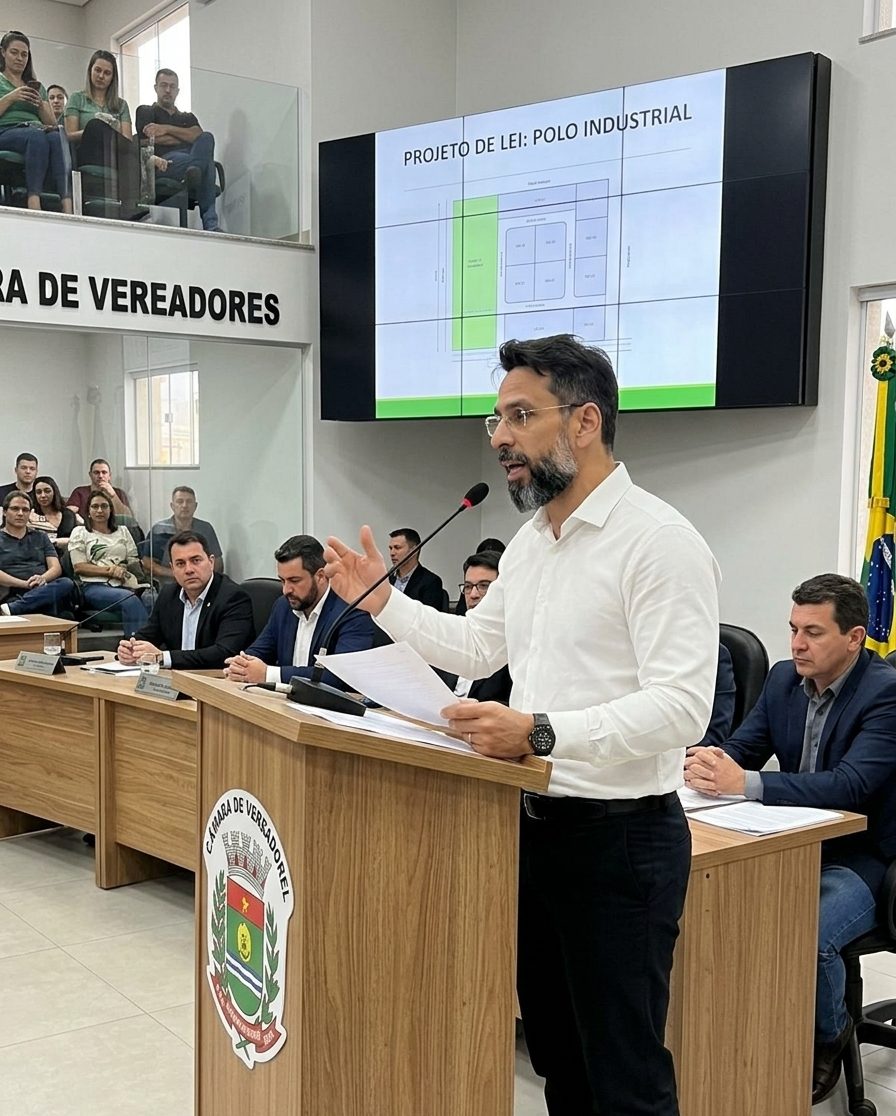
Industrial hub bill

From the technical justification to the mayor's signature: we support the preparation, political coordination, presentation on the council floor, public hearings and the vote.

See the 5 steps
04

Go-to-market and job creation

Attraction and sales

An industrial hub only fulfills its purpose when it is occupied and creating jobs. CARTUN doesn't wait for companies to arrive: we go to them.

Technical visit to an industry during company prospecting

National and international industrial prospecting

Business rounds and strategic meetings with major industries and multinationals, presenting the tax, logistics and territorial advantages of the new hub.

Guaranteed demand and anchor attraction

We connect industries seeking expansion with city governments offering incentives, so the hub launches with confirmed anchor companies and draws the entire supply chain.

Cluster segmentation

Grouping complementary industries to cut logistics and operating costs across the chain.

Long-term contracts

Sales based on legal certainty and contractual stability for the companies that set up.

Place marketing

Promoting the city's logistics advantages at chambers of commerce and industrial trade fairs.

Active outreach to decision-makers

Direct contact with operations, supply chain, logistics and finance directors at mid-sized and large industries, presenting the hub as an expansion opportunity.

Institutional partnerships

Relationships with economic development departments and industry federations, which recommend the hub when an industry shows interest in the region.

Industrial real estate market

Coordination with consultancies specialized in industrial real estate that serve multinationals looking for space.