Presentation of the industrial hub project to the mayor and secretaries

An industrial hub for your city

We advise city and state governments that want to bring an industrial hub to their municipality: from surveying the population to industry in operation.

I want a hub in my city

For public officials

Revenue, jobs and a development legacy

Solutions to attract revenue, create jobs, organize the municipal master plan and leave a development legacy for the city.

Higher tax revenue

New industries expand the municipality's ISS, IPTU and ICMS tax base.

Job creation

Direct and indirect jobs for families in the city and across the region.

Orderly development

A hub aligned with the Master Plan and zoning, with organized urban growth.

Legacy

A structuring project that transforms the municipality's socioeconomic future.

How we start

First we listen to the city, then we propose the solution

STEP 01

Municipal survey

The first step is a survey in the city. We find out how residents rate the municipal administration and what they need most, what they complain about most and what they want most.

  • Rating of the municipal administration
  • The population's main needs
  • Most frequent complaints and demands
  • Job and income expectations

STEP 02

Presenting the diagnosis

We present the results to the municipality with a clear statistical reading: where the opportunities are, which sectors have synergy with the region and how much community support there is for a new hub.

STEP 03

Solution proposal

Based on the diagnosis, we present CARTUN's solution for hire: the hub design, the legal and territorial roadmap, the business model and the company attraction strategy.

STEP 04

Execution and company attraction

We handle all the administrative and legalization work for the development and go out to the industries, so the hub launches with confirmed anchor companies and creates jobs from day one.

What we deliver

Integrated solutionsfor the municipality

A complete regional development ecosystem, carried out with municipal, state and federal bodies.

Economic potential study

Technical mapping of the municipality's socioeconomic base, logistics corridors and resources to identify the sectors with the greatest synergy: logistics, manufacturing, agribusiness or energy.

Public opinion research

Scientific sample surveys to understand public perception and job expectations and reduce resistance, ensuring community alignment.

Land prospecting

Identification of strategic sites connected to the main logistics corridors of Northeast Brazil: ports, federal highways, railways, power and water.

Legalization and expropriation

Full legal and administrative management: from the public-interest decree and appraisal reports to fair compensation, shielding the project against future disputes.

Licensing and filings

Permits, urban zoning, environmental licenses (LP, LI and LO) and incentive applications with municipal, state and federal bodies, such as Sudene.

Hub bill

Justification, feasibility study and drafting of the bill, with support from political coordination to enactment. See the step-by-step below.

Tax incentives and PPPs

Negotiation of IPTU, ISS or ICMS tax exemptions and structuring of Public-Private Partnerships to speed up external infrastructure works.

Anchor company attraction

An active link between government, which provides the land and incentives, and the private sector, which secures investment and jobs.

Place marketing

Promoting the city's logistics advantages at chambers of commerce, industrial trade fairs and business rounds.

Industrial hub bill

From idea to enacted law

Turning the hub into a legal reality takes technical preparation, political dialogue and public participation. We support the Executive branch and the City Council at every step.

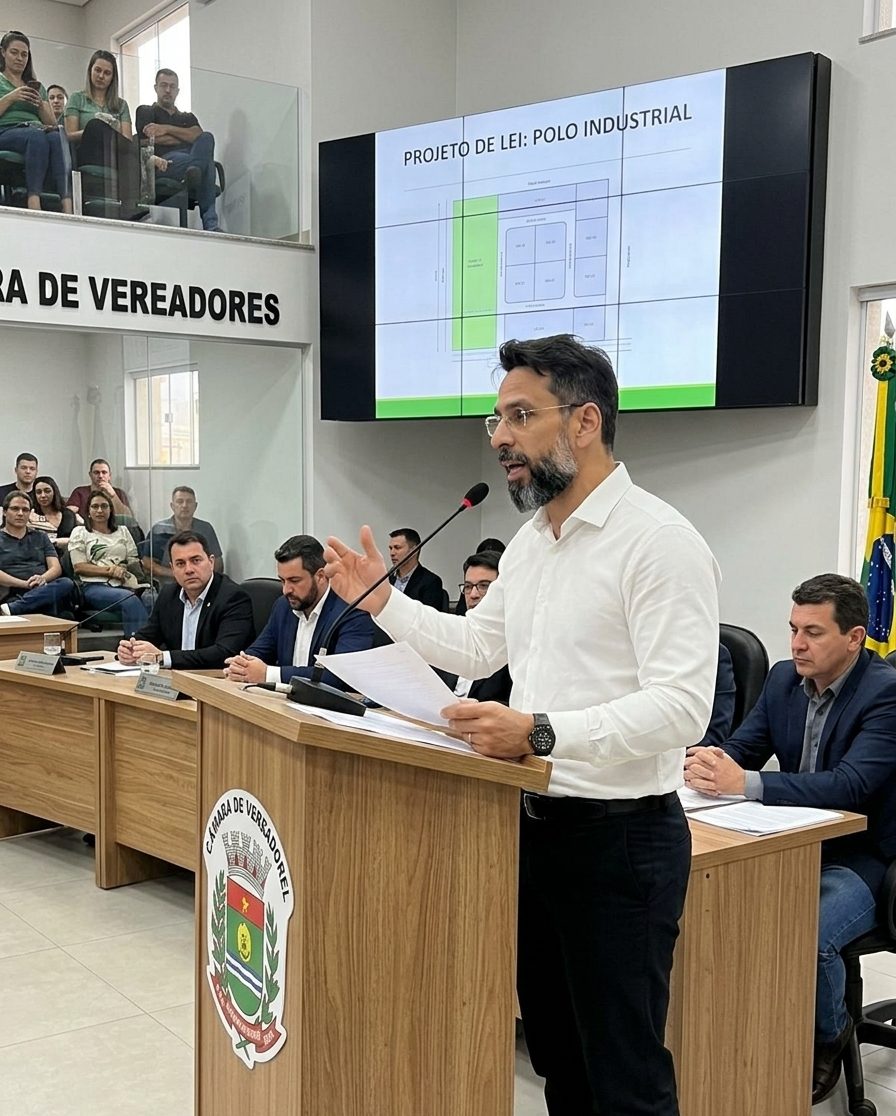
Presentation of the industrial hub bill on the City Council floor Presenting the bill at the City Council

Governance and compliance

Transparency isour greatest asset

Our work involves expropriations, public opinion and government. That is why ethics, legal compliance, transparency with landowners and social responsibility in research guide every step.

Respect for environmental laws

Full environmental licensing (LP, LI and LO), wastewater treatment and impact mitigation before construction begins.

Transparent expropriations

Public-interest decrees, property appraisal reports and open negotiation, with fair compensation for owners.

Ethical government relations

Relations with government guided by legality, following the formal procedures of the Executive, committees and the council floor.

Responsible research

Sample surveys with scientific methodology, respect for respondents and honest reading of results.

Legal compliance

Zoning, Master Plan, permits and filings handled with municipal, state and federal bodies.

Dialogue with society

Public hearings with business owners, unions and residents' associations to ensure community alignment.

Responsible expropriation

Legal certaintyfor all parties

Well-run expropriation processes protect the owner, the municipality and the companies that will set up.

1

Feasibility study

Review of the Master Plan, zoning and the real need to expropriate the area.

2

Public-interest decree

Drafting of the municipal or state decree with technical and legal grounds.

3

Appraisal reports

Property valuation as the basis for transparent negotiation.

4

Negotiation and fair compensation

Direct dialogue with owners and fair compensation, shielding the project against future legal disputes.

5

Land regularization

Structuring land titles and subdividing the industrial lots.